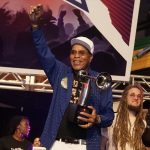
Frankie Paul

Frankie Paul Biography: Reggae Dancehall Music Career
The world of Caribbean music would be significantly quieter without the prolific and soulful contributions of Frankie Paul. Often hailed as the “Jamaican Stevie Wonder,” this legendary artist became a cornerstone of the transition from roots reggae to the high-energy dancehall era. Throughout the 1980s and 1990s, he dominated the airwaves with a voice that was both gravelly and incredibly melodic. His ability to improvise and his relentless work ethic made him a titan of the recording studio. Consequently, he remains one of the most influential vocalists in the history of Jamaican popular music.
Early Life and Background
- Birth Name: Paul Blake
- Date of Birth: October 19, 1965
- Place of Birth: Kingston, Jamaica
The journey of this musical icon began under humble and challenging circumstances in the heart of Jamaica.
Paul Blake was born into a world of shadows, as he was visually impaired from birth. He spent much of his early childhood attending the Salvation Army School for the Blind. This institution played a pivotal role in his early development. Despite his lack of sight, his auditory senses were incredibly sharp. He began singing as a way to navigate and express his inner world. During his youth, he underwent a life-changing operation on his eyes. This medical procedure was partially successful, granting him a limited degree of vision that he carried throughout his life.
Life Before Fame
Before becoming a household name, Paul Blake lived a life deeply rooted in the community of the visually impaired. His daily routine revolved around the school and the church. He did not have a traditional “9 to 5” job in the corporate sense. Instead, he spent his hours honing his technical skills on various musical instruments.
Surprisingly, he was a talented multi-instrumentalist. He learned to play the drums and keyboards entirely by ear. Music was not just a hobby for the young Paul; it was his primary means of communication. He often performed for his peers and teachers. These early performances helped him develop the confidence needed for a professional career. He possessed an uncanny ability to mimic the voices of international stars, which became a signature part of his early talent showcases.
How He Became Famous
The discovery of Frankie Paul is the stuff of musical legend. In 1975, the American soul superstar Stevie Wonder visited the Salvation Army School for the Blind in Kingston. During this visit, a young Paul Blake was encouraged to sing for his idol. Wonder was reportedly mesmerized by the boy’s vocal range and natural charisma.
Stevie Wonder told the young boy that he had the potential to be a star. This endorsement served as the ultimate catalyst for his career. Shortly after, he adopted the stage name Frankie Paul. He began visiting local recording studios, most notably Channel One and Volcano. Producers quickly realized that the young man could record a hit song in a single take. This efficiency made him a favorite among the busy producers of the early 1980s dancehall scene.
Career & Major Events
The 1980s marked the meteoric rise of Frankie Paulas a global reggae ambassador. He successfully bridged the gap between the conscious themes of roots reggae and the lover’s rock style.
The Breakthrough Years
In 1983, he teamed up with producer Henry “Junjo” Lawes. This collaboration resulted in the hit “Worries in the Dance.” The track became a massive club anthem. It solidified his place in the burgeoning dancehall movement. He was not just a singer; he was a prolific recording machine. It was rumored that he could record several albums in a single week.
Global Success and “Sara”
By the mid-80s, his fame had spread to the United Kingdom and the United States. In 1987, he released “Sara,” a song that would become his signature anthem. This track showcased his ability to blend pop sensibilities with authentic reggae rhythms. During this era, he toured extensively across Europe and Japan. He became one of the few dancehall artists of the time to maintain a consistent international touring schedule.
Challenges and Transitions
The 1990s brought new challenges as the musical landscape shifted toward “ragga” and harder digital beats. However, Frankie Paul adapted with ease. He collaborated with various labels to keep his sound fresh. While many of his peers struggled to stay relevant, he continued to churn out hits. His voice remained a constant presence on reggae charts worldwide.
10 Facts About Frankie Paul
- He was nicknamed the “Jamaican Stevie Wonder” because of his visual impairment and immense talent.
- He reportedly recorded over 30 individual studio albums throughout his career.
- His eyesight was partially restored by a high-tech operation in his youth.
- He was known for his incredible ability to improvise lyrics on the spot.
- Frankie was a gifted drummer before he became a famous vocalist.
- He lived in Africa, specifically The Gambia, for several years during the latter part of his life.
- His first professional recording was a track titled “African Princess.”
- He performed at the prestigious Reggae Sunsplash festival multiple times.
- Producers loved him because he rarely needed more than one “take” in the studio.
- He remained one of the top-selling reggae artists in Japan for over a decade.
Top 10 Most Popular Songs
- Sara
- Pass the Tu-Sheng-Peng
- Cassandra
- Worries in the Dance
- I Know the Score
- Curfew
- Tidal Wave
- Should I
- Slow Down
- Day-O
Record Labels
Throughout his career, Frankie Paul worked with a diverse array of influential labels:
- Greensleeves Records
- Volcano
- VP Records
- Studio One
- Jammys
- Channel One
- RAS Records
Later Life and Death
In his later years, the artist moved to The Gambia, seeking a connection with his ancestral roots. Unfortunately, his health began to decline significantly in the mid-2010s. He suffered from chronic kidney disease and diabetes. In 2016, his health took a turn for the worse, leading to the amputation of his left leg.
Despite these physical struggles, his spirit remained high. He continued to express a desire to record music until the very end. On May 18, 2017, Frankie Paul passed away at the University Hospital of the West Indies in Kingston. He was 51 years old. His passing was mourned by the global music community as the loss of a true vocal powerhouse.
Legacy & Impact
The legacy of Frankie Paul is etched into the DNA of modern dancehall. He taught a generation of artists how to blend melody with the “rough and tough” energy of the streets. His influence can be heard in the vocal styles of many contemporary Caribbean stars. Furthermore, he proved that physical disabilities are no barrier to achieving global stardom.
He is remembered as a kind-hearted man who lived for his art. His music continues to be played in dancehalls from Kingston to London. By maintaining a positive voice throughout his struggles, he became a symbol of resilience. Today, collectors still seek out his vast discography, ensuring his voice remains timeless.
Relevant Statistics
- Total Albums: Over 30 studio albums.
- Career Span: Approximately 40 years.
- Global Hits: Over 20 songs that reached top charts in various countries.
- Estimated Recordings: Likely over 1,000 individual tracks.
Conclusion
In conclusion, Frankie Paul was a rare talent who defined an entire era of Jamaican music. From his early days at the School for the Blind to his international tours, he remained dedicated to the craft of singing. He overcame personal adversity with grace and a powerful vibrato. His extensive catalog of music serves as a masterclass in reggae vocal performance. As we look back on his career, it is clear that his contribution to the culture is irreplaceable. He was, and always will be, a giant of the dancehall.